Stewardship Guide & Field Manual | Wallkill River Watershed Alliance
Volunteer Handbook New Paltz, NY Climate Corps Edition

Riparian Stewardship & Invasive Guide

Wallkill River Watershed Alliance — Rivers-to-Ridge Buffer Restoration Site

Stewardship Location
LAT: 41.750784
LON: -74.091117
41 Springtown Rd Trailhead

Intern Field Briefing

On Wednesday, June 17, 2026, interns will maintain the Trees for Tribs restoration zone by clearing invasive growth around shelter tubes.

Meeting Details

Location: 41 Springtown Rd Trailhead Parking Lot
Timing: 1:00 PM start

Crew Preparation

Provided: Gloves + water
Bring: Sunblock, bug spray, phone, boots

Weather: Clean skies (Rain forecast delayed until 6-7 PM). Ideal work window!
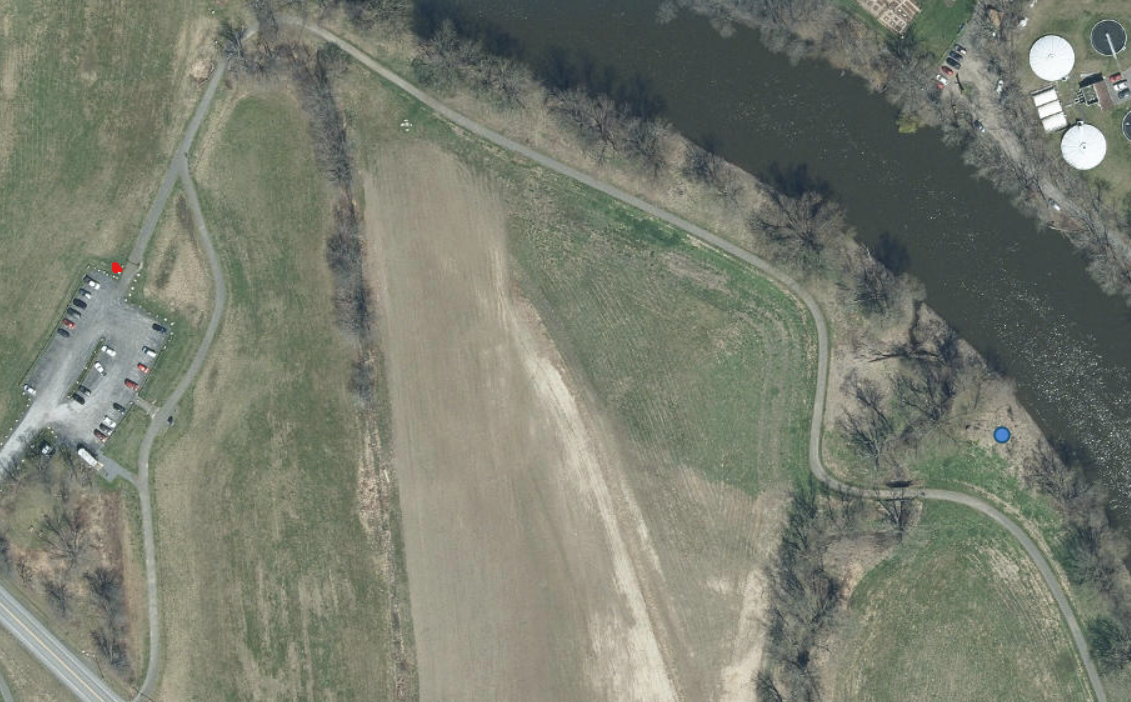
Trailhead & Site Map Aerial Reference
Aerial map of River-to-Ridge trail area with marked parking lot and Trees for Tribs site

Red dot: Trail entrance

Blue dot: Trees for Tribs site

CRITICAL PRIORITY — Tier 2 Eradication Zone CRISP Tier 2 (Eradicate)

In-Situ Reference Image

IMG_0165-2.jpeg
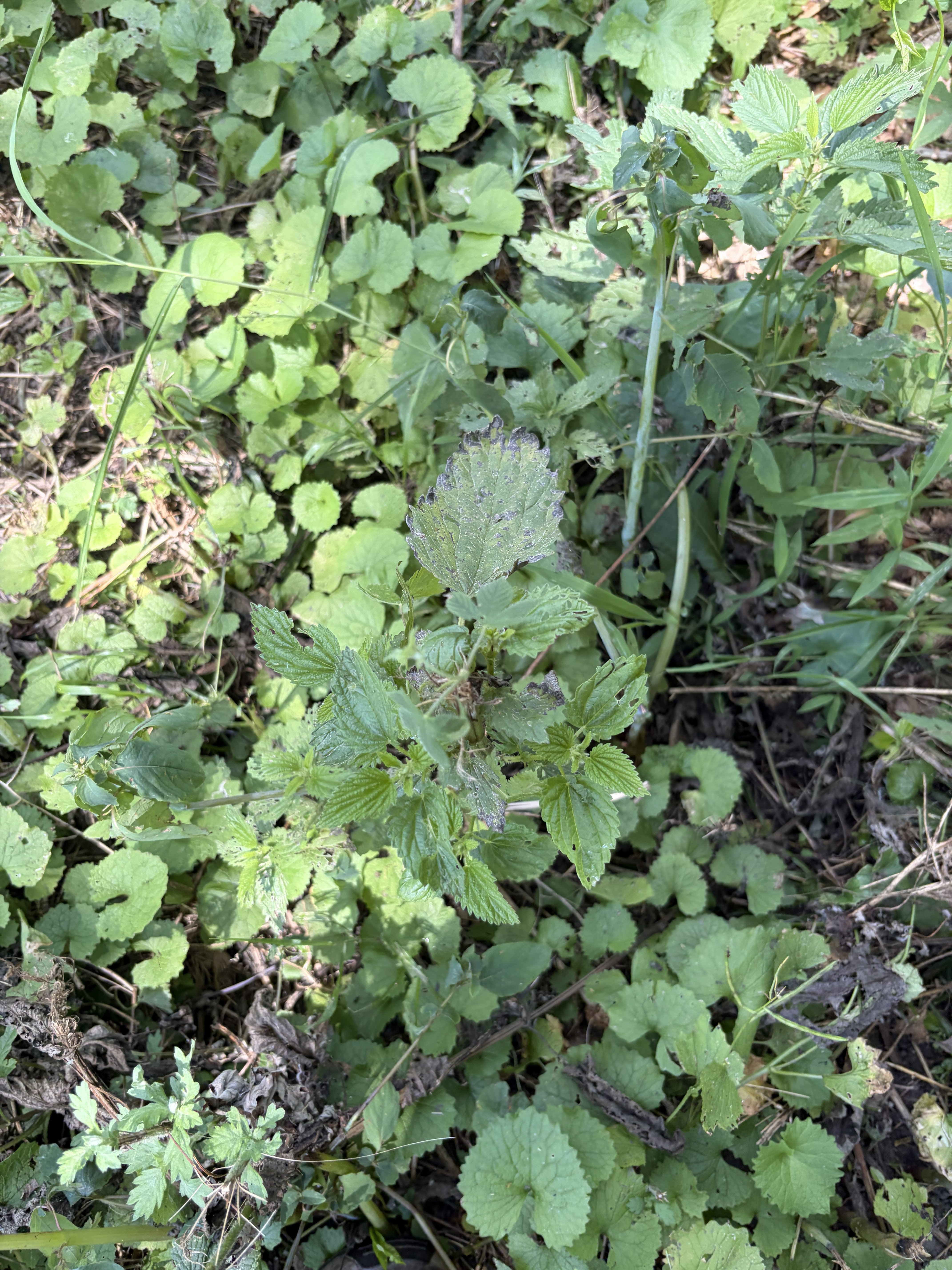
European Stinging Nettle
Diagnostic View: Highly dangerous translucent silica trichomes are distributed along stems and alternate margins. Always use heavy leather gloves!

European Stinging Nettle

Urtica dioica subsp. dioica

  • Leaf Arrangement: Strictly opposite, ovate-to-lanceolate with cordate bases.
  • Anatomical Markers: Equipped with hollow stinging silica hairs containing formic acid.
  • Lookalike Ruled Out: Wood Nettle has alternate leaves clustered near the top of the stem.
High Risk. Wear heavy leather gloves.
Active Control Area — Widespread Colonizer CRISP Tier 4 (Local Control)

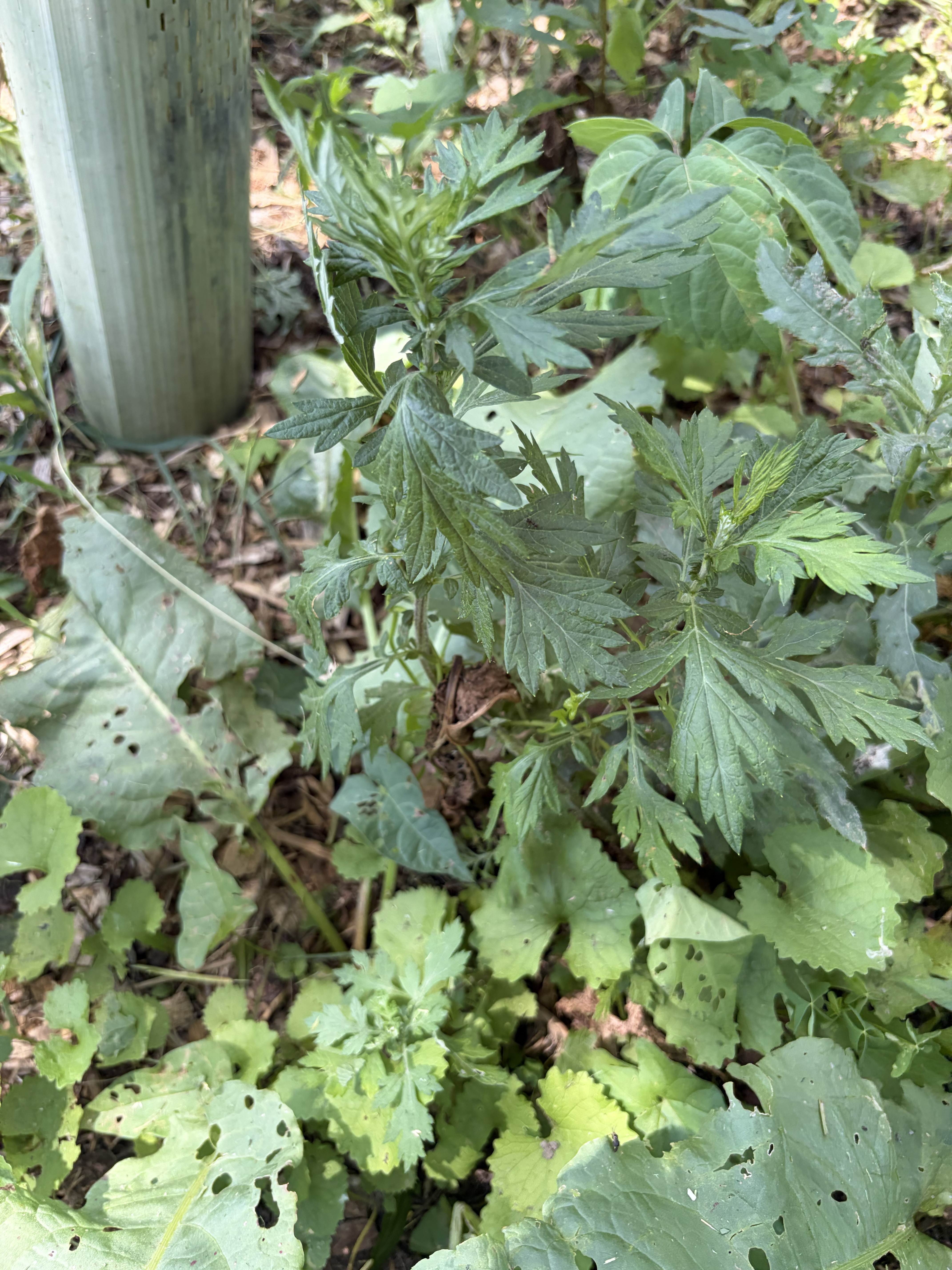
In-Situ Reference Image

IMG_0166.jpeg
Mugwort
Diagnostic View: Alternate deeply divided pinnate leaves with a silvery-white woolly underside. Crushed leaves smell highly aromatic (like sage).

Mugwort

Artemisia vulgaris

  • Foliage Setup: Deeply pinnately lobed with smooth dark green tops and woolly backs.
  • Scent: Strong aromatic aroma when crushed.
  • Lookalike Ruled Out: Common Ragweed leaves are completely green on both sides and lack the sage scent.
Focus: Cutting / Root clearing.
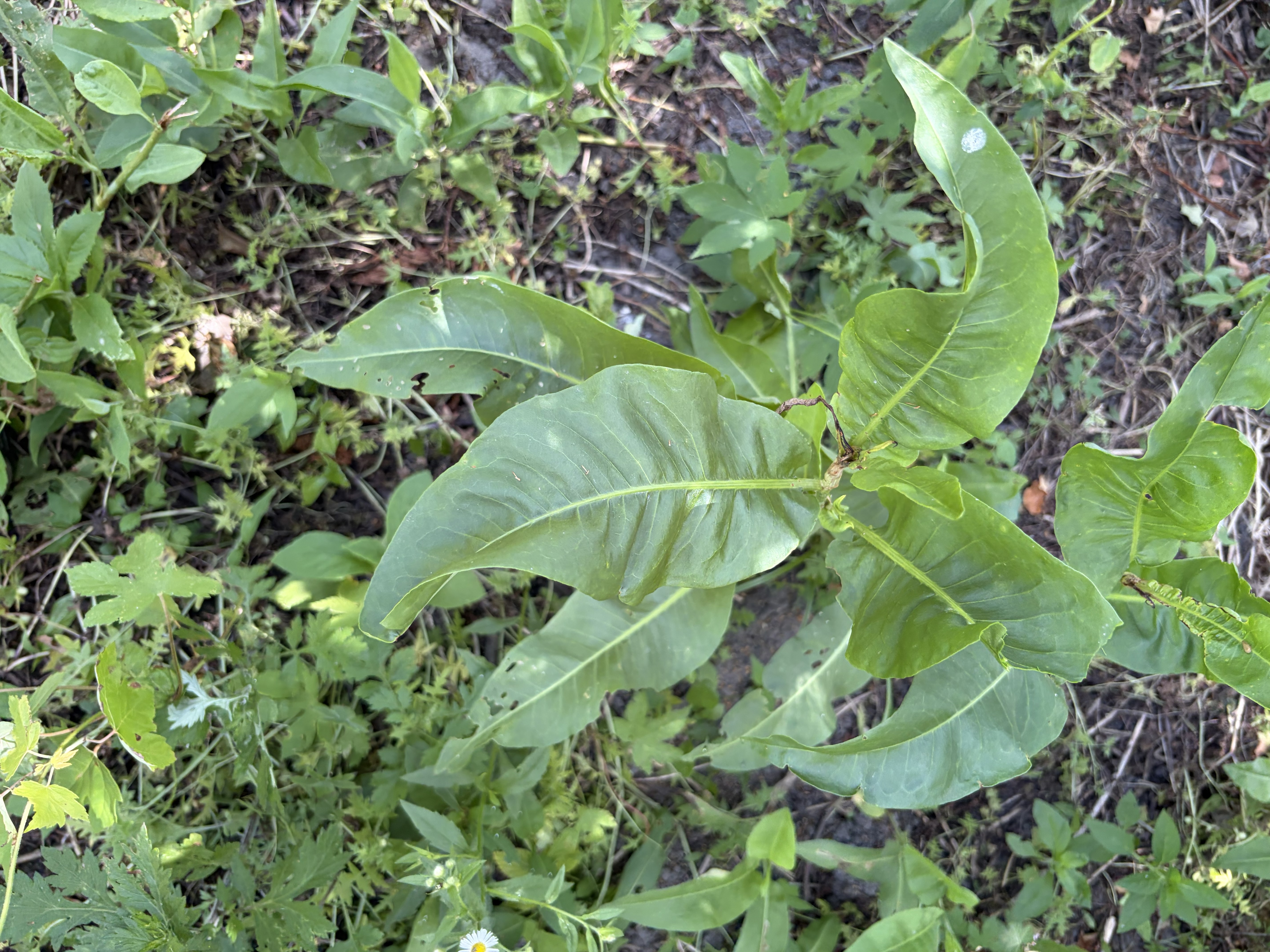
MYSTERY SPECIES IDENTIFIED — Basal Rosette Habit Unranked Weed

IMG_0172 ID Reference

IMG_0172.jpeg
Common Burdock
Diagnostic View: Large, wavy leaves radiating as a flat rosette. The thick perennial taproot must be severed completely below the root crown.

Common Burdock IMG_0172 Match

Arctium minus

  • Leaves: Extremely broad, wavy, cordate bases, light veins, rough top surface.
  • Growth: Massive flat basal rosette in its first year, bolting with hooked seed-burs in year two.
  • Lookalike Ruled Out: Skunk Cabbage leaves are completely flat-edged and release a strong sulfurous skunk odor when torn.
Requires root tools (sever deep taproot).
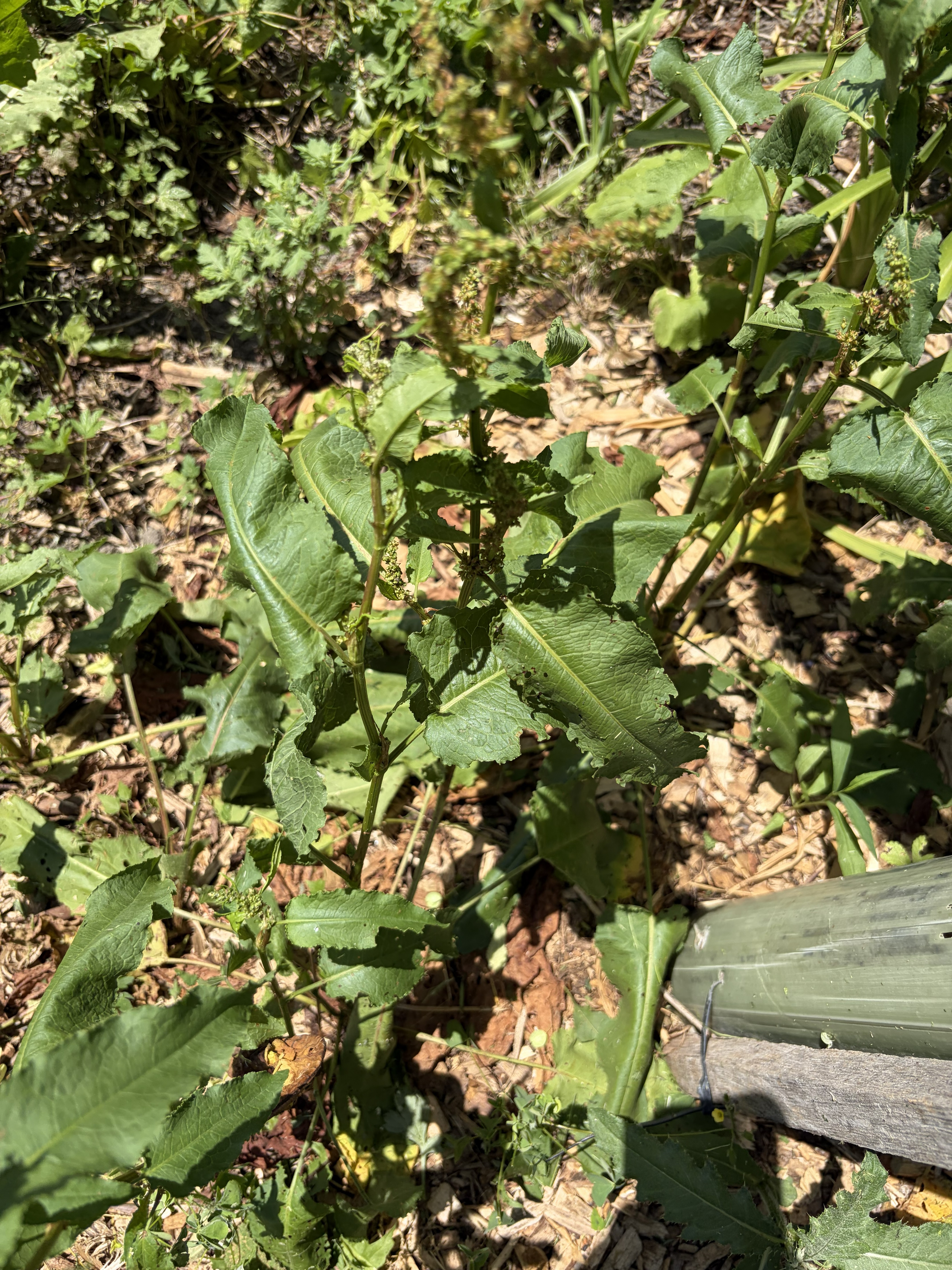
Widespread Naturalized Species — Buffer Edge Competitor Unranked Weed

In-Situ Reference Image

IMG_0169.jpeg
Curly Dock
Diagnostic View: Highly crinkled, wavy leaf margins with a long, narrow lanceolate profile. Erect, dense greenish-brown flower stems turn deep red in summer.

Curly Dock

Rumex crispus

  • Leaf Margins: Wavy, crinkled, undulated edges.
  • Seed Heads: Highly structured dense vertical clusters turning a deep copper-brown.
  • Lookalike Ruled Out: Native Swamp Dock lower leaves are flat with entirely smooth, non-crinkled borders.
Taproot removal required.
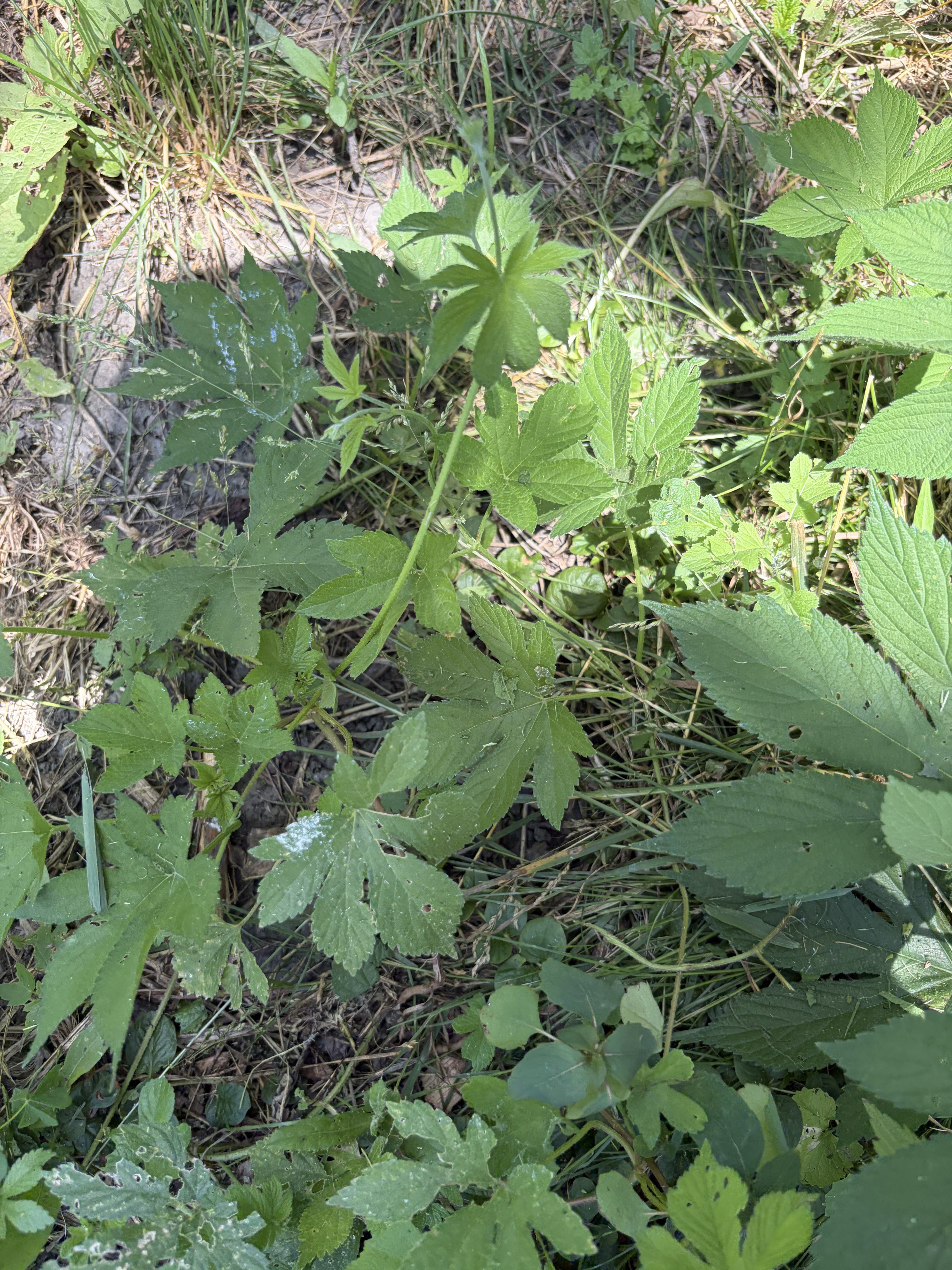
ACTIVE CONTAINMENT — Highly Aggressive Climbing Vine CRISP Tier 3 (Containment)

In-Situ Reference Image

IMG_0168.jpeg
Japanese Hops
Diagnostic View: Palmate leaves with 5 to 7 deeply divided lobes. Stems and petioles are lined with scratchy, downward-pointing hook-like prickles.

Japanese Hops

Humulus japonicus

  • Structure: 5-7 deeply cut palmately lobed leaves with sharply serrated margins.
  • Stem Touch: Coated in downward-pointing, scratchy anchor prickles.
  • Lookalike Ruled Out: Native American Hops has primarily 3 lobes and lacks severe rasping climbing prickles.
Wear gloves and eye protection. Highly abrasive.
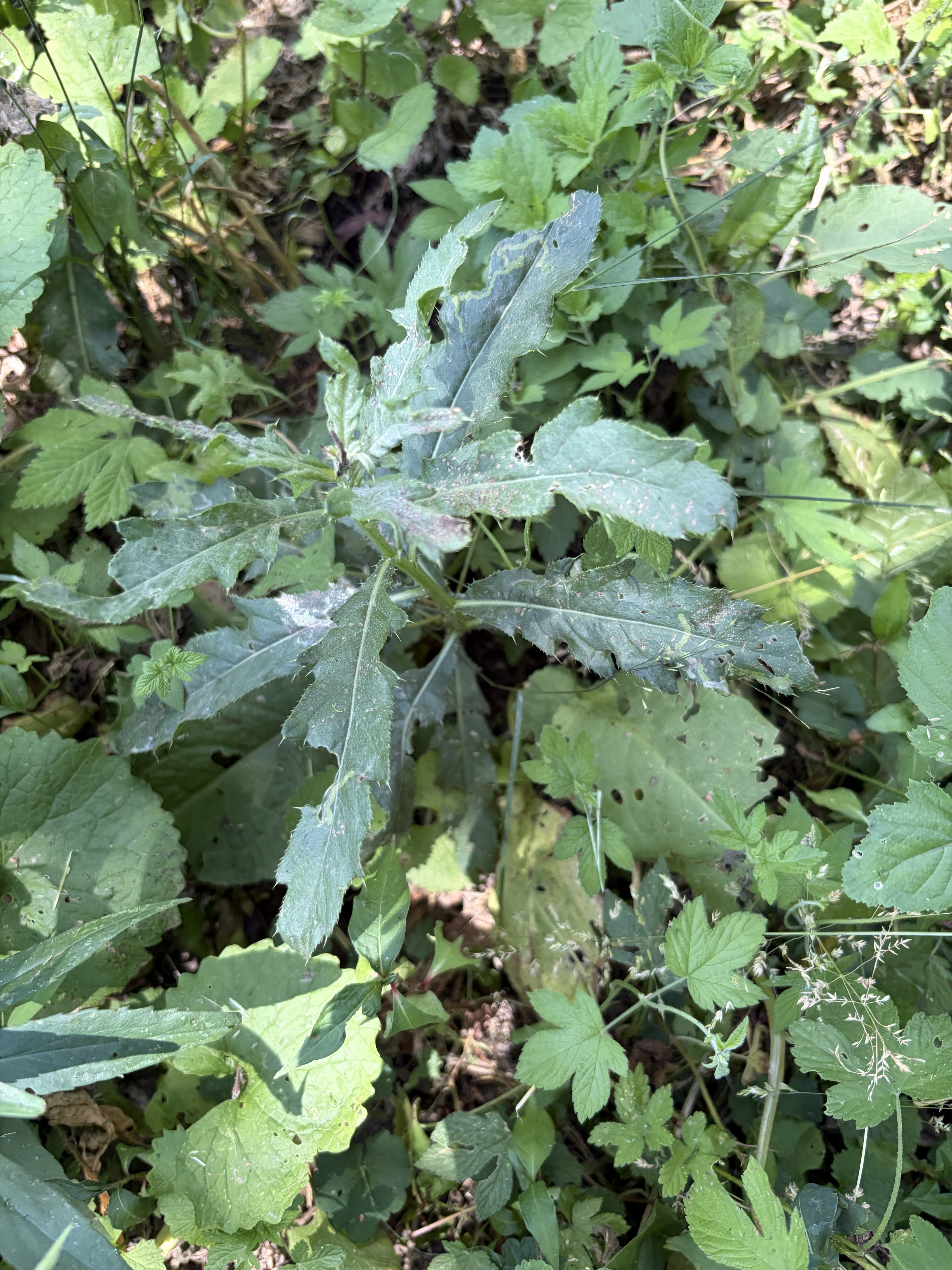
Active Local Control Phase — Deep Rhizome Invader CRISP Tier 4 (Local Control)

In-Situ Reference Image

IMG_0167.jpeg
Canada Thistle
Diagnostic View: Alternate crinkled, lobed leaves lined with sharp yellow spines. Smooth stems lack the continuous wings seen in Bull Thistles.

Canada Thistle

Cirsium arvense

  • Leaf Setup: Alternate, deeply crinkled lobed leaves armed with fine spines.
  • Stems: Stems are ridged but completely lack continuous spiny "wings".
  • Lookalike Ruled Out: Bull Thistle has continuous spiny wings extending down the stems and rough, scratchy upper leaf surfaces.
Spiny leaves. Wear protective work gloves.