Still Waters: Exposing Cyanobacteria in the Wallkill River
NY Emmy-Nominated Documentary | Wallkill River Watershed
NY Emmy-Nominated Environmental Justice Documentary
Still Waters: Exposing Cyanobacteria in the Wallkill River
Still Waters is an Environmental Justice Documentary exploring the recurrence of Harmful Algal Blooms (HABs), hydrological stagnation, and cyanobacteria dynamics impacting the Wallkill River watershed. Nominated for a New York Emmy Award in the Environment: Science — Short Form Content category.
Save the Sturgeon Pool Impoundment: Demand Flow & Water Quality Accountability
Central Hudson Gas & Electric is pursuing original licenses from the Federal Energy Regulatory Commission (FERC) for the Sturgeon Pool Hydroelectric Project (FERC No. 15396) and the Dashville Hydroelectric Project (FERC No. 15397). Operating since the 1920s, these dams alter natural river flows, trapping nutrients and creating warm, stagnant water that fuels toxic cyanobacteria.
Key Demands for FERC and NYS DEC § 401 Water Quality Certification
- Disrupt HAB Stagnation through Flow Modulation: Require operational flow adjustments to prevent prolonged summer stagnation in Sturgeon Pool and Dashville Pool that triggers rapid cyanobacteria colony formation.
- Comprehensive, Extended Monitoring (April–November): Mandate daily measurements of chlorophyll-a, phycocyanin fluorescence, and nutrient profiles (nitrogen and phosphorus fractions) rather than truncated summer spot checks.
- Standardized Subsurface Mussel & Aquatic Surveys: Replace visual reservoir drawdowns with rigorous subsurface transects and experimental fish entrainment evaluations to protect native species and the American eel.
- Formal Public Access & Recreation Protection: Establish formal, safe public river access points and recreational surveys across the entire project footprint.
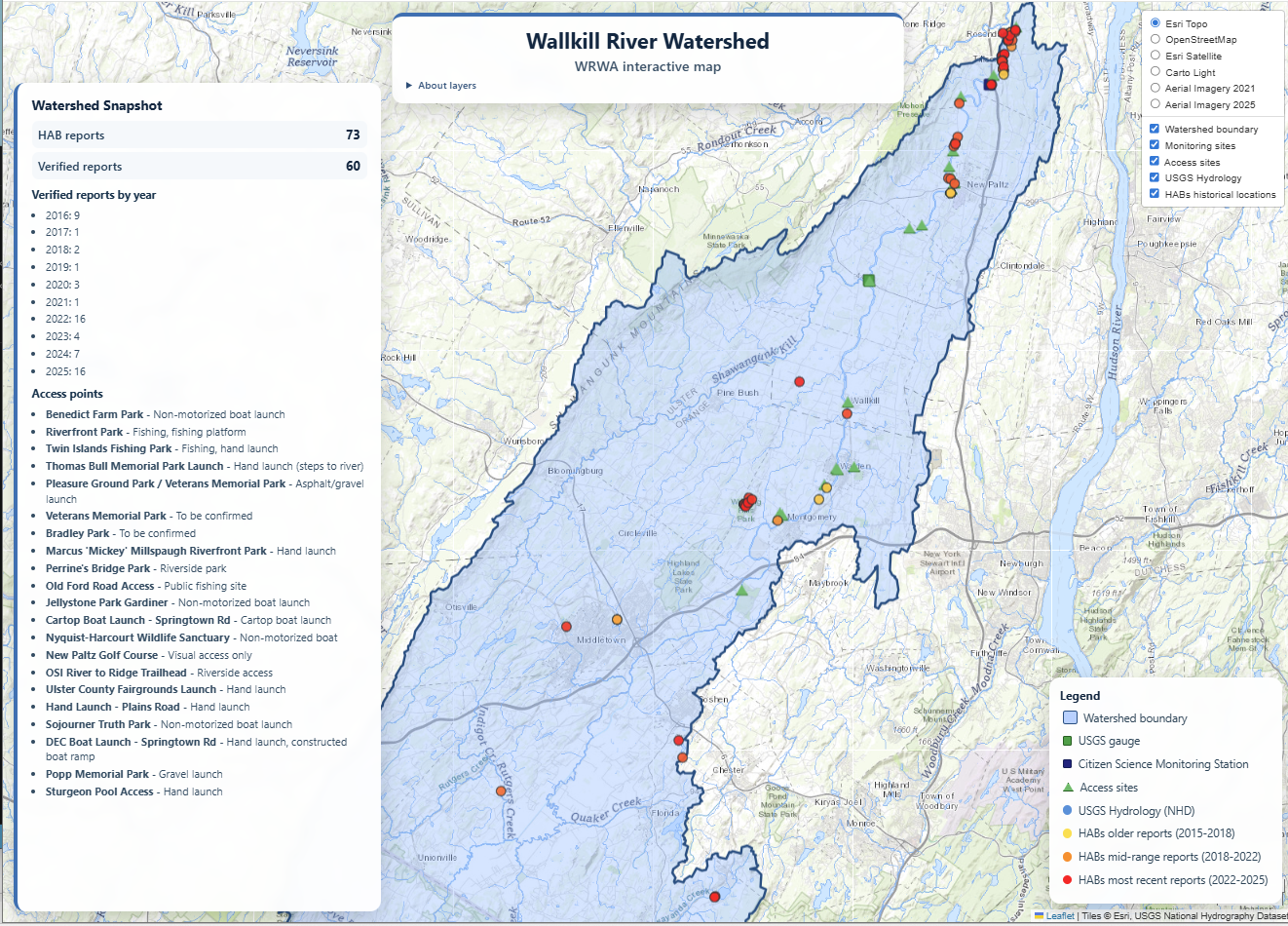
Lower Wallkill River & Impoundment Monitoring Map
Documentary Production Credits
A student film production by Marist College examining community water security and environmental justice in the Hudson Valley watershed. Nominated for a New York Emmy Award in the Environment: Science — Short Form Content category at the 69th Annual NY Emmy Awards.
Bobby Howe (Wallkill River Watershed Alliance)
Special Thanks: Hudson River Watershed Alliance for facilitating the connection between the student filmmakers and the local watershed organization.
What are Cyanobacteria (HABs)?
Often mistakenly called "algae," cyanobacteria are photosynthetic prokaryotic microorganisms. Under prolonged heat, solar radiation, nutrient loading, and minimal flow velocity, populations multiply rapidly into dense surface blooms.
- Microcystin Production: Blooms can release hepatotoxins that cause severe liver damage and gastrointestinal illness in humans and animals.
- Hydrological Stagnation: Low-flow conditions behind impoundments and dams trap nutrients, allowing colonies to form surface scums.
- Key Field Indicators: Elevated water pH (reaching 8.5 to 9.0+), abnormal dissolved oxygen swings, and distinctive pea-soup or spilled-paint pigment changes.
Canine & Public Health Alert
Dogs face acute vulnerability to microcystin toxicity. Cyanobacteria scum accumulates along riverbanks and shorelines where pets swim and drink.
- Exposure Route: Ingestion of contaminated water or licking dried cyanotoxins directly from fur after swimming.
- Critical Symptoms: Lethargy, excessive drooling, vomiting, loss of coordination, seizures, and rapid abdominal inflammation.
- Action Protocol: Keep pets strictly leashed near stagnant or discolored water. Rinse immediately with fresh water if exposure is suspected and seek immediate veterinary intervention.
Watershed Action Checklist
Contribute to local watershed health by tracking personal actions and reporting suspected blooms to the New York State Department of Environmental Conservation (NYS DEC) and watershed organizations.
Loading saved checklist status...
Copy the scientific comment template below and submit it directly through the FERC eComment portal to ensure community voices are part of the permanent licensing record.